
What Are The Three Court Challenges Technology Can Solve Today?

Courts are being asked to do more with less. Staff are managing heavy caseloads, growing public expectations, and administrative processes that were often designed decades ago. At the same time, citizens expect accessing court services to be as straightforward as interacting with almost any other organization.
Three challenges in particular continue to create unnecessary friction for both court staff and the people they serve.
1. Forms Are Still Too Complicated
Forms are essential to nearly every court process, but completing the right form correctly can be surprisingly difficult.
Citizens may have to determine which form applies to their situation, locate it, understand unfamiliar terminology, and make sure every required field is completed. A simple mistake can mean rejected paperwork, another trip to the courthouse, or additional staff time correcting the problem.
Courts are beginning to rethink that experience. Across North Carolina, courts have integrated digital forms with print and scan capabilities, giving citizens more ways to access and complete the documents they need. Rather than relying solely on traditional paper processes, technology can help bridge the gap between digital and physical court services while making forms more accessible.
For court staff, making forms easier to access and complete means fewer routine questions, fewer incomplete submissions, and less time spent troubleshooting paperwork.
2. People Don’t Know Where to Go
Courthouses can be complicated places to navigate, particularly for someone visiting for the first time and pro se litigants. Multiple courtrooms, clerk's offices, departments, and service areas can leave visitors wondering where they are supposed to go.
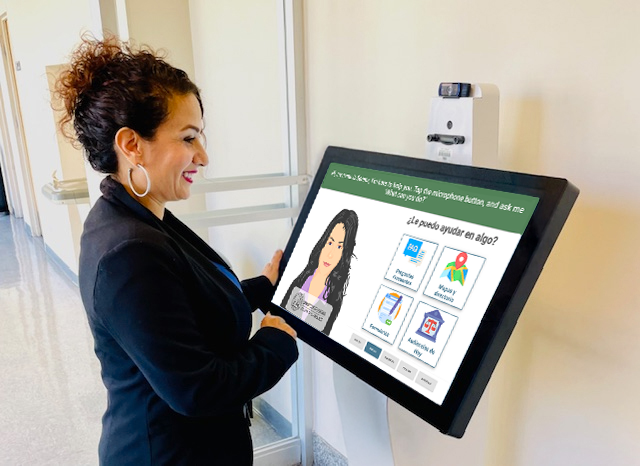
The Superior Court of California, County of Stanislaus, is addressing this challenge with digital wayfinding. Visitors can use interactive technology to identify their destination and receive guidance through the courthouse, reducing uncertainty and helping them get where they need to be.
Digital wayfinding creates a better experience for visitors while reducing the number of directional questions fielded by court staff. Instead of repeatedly stopping employees to ask where a courtroom or department is located, visitors have a self-service resource designed specifically to guide them.
3. Routine Questions Consume Valuable Staff Time
Many interactions between citizens and court employees aren't complicated. They're simply repetitive.
Questions about hours, payments, court dates, records, filing procedures, and available services can arrive dozens or even hundreds of times each day. Individually, each interaction may take only a few minutes. Collectively, they represent significant staff time.
Chester County, Pennsylvania, is demonstrating how self-service technology can help. Multilingual self-service kiosks provide citizens with access to answers and court information without requiring an employee for every interaction. For citizens, that means convenient access to information in the language they are most comfortable using. For staff, it means fewer repetitive questions competing for their attention.
Technology doesn't need to replace the human side of the courthouse. By making forms easier, navigation clearer, and routine information accessible through self-service, courts can give staff more time to focus on the people and situations where human assistance matters most.


Comments