
What Happens When Public Access Extends Beyond the Courthouse?

For many courts and local governments, modernization is often viewed through a single lens: replacing outdated technology. But some of the most effective public access initiatives are not just about technology it

self. They are about extending services to the communities that need them most.
El Paso County, Texas, is a strong example of what that can look like in practice.
Serving a large and diverse population across urban centers, rural communities, military installations, and public facilities, El Paso County faced a common challenge: how do you deliver consistent public access across a geographically widespread region? Residents often traveled long distances or made multiple visits just to access routine county and court information.
Building a County-Wide Access Network
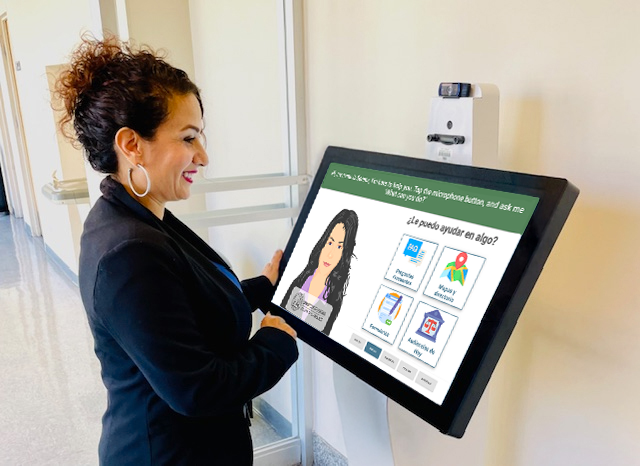
Through a countywide deployment of multilingual public access points powered by ARS Connect, El Paso expanded access across courts, the law library, county annexes, and the Fort Bliss Military Base.
The deployment focused on improving usability and accessibility through:
Multilingual communication
Guided digital workflows
Real-time information delivery
Wayfinding and navigation support
Access to forms, services, and FAQs
Importantly, the project recognized that modernization is not one-size-fits-all. Public access solutions must account for language barriers, transportation limitations, and varying levels of digital familiarity.
The deployment also demonstrated the importance of meeting residents where they already are. By placing access points throughout the community rather than limiting services to a single courthouse, El Paso County created a more approachable and convenient experience for residents navigating public services.
That approach produced measurable operational impact.
Supporting Both Residents and Staff
Since the initial launch in 2024, the self-service kiosks have seen strong usage across locations.
Over 50,000 routine tasks have been completed through guided self-service workflows.
Approximately 3,645 staff hours have been saved by shifting routine informational requests away from counters and phones.
Nearly 30% of sessions are conducted in Spanish, highlighting the importance of multilingual accessibility.
The initiative also expanded access for military members and families at Fort Bliss, helping more than 30,000 users connect with county and court resources without having to request time off base.
In addition to improving public access, the deployment helped reduce pressure on front-counter staff by allowing residents to complete routine informational tasks independently. This allowed staff to dedicate more time to higher-value interactions and more complex citizen needs.
Modernization That Meets Communities Where They Are
One of the most notable aspects of the El Paso deployment was its continued expansion after initial rollout success. The county later introduced the solution at additional public destinations, including the El Paso County Zoo and Museum, further broadening engagement opportunities.
Successful modernization efforts are rarely defined by technology alone. They succeed when they are designed around real community needs, deployed thoughtfully across locations, and built to improve access for everyone they serve.


Comments